
A Comprehensive Guide to Slip Leads: Use, Safety, and British Craftsmanship
Last October, a survey of 500 UK dog owners revealed that 64% feel overwhelmed by conflicting training advice, often fearing they might accidentally hurt their pet with the wrong equipment. It’s a feeling we understand deeply at our family workshop; you want your daily stroll to be a moment of connection, not a struggle with a collar that slips or a lead that feels clumsy. You likely believe that your dog deserves the very best, combining safety with that timeless, rustic elegance we all love. Choosing a slip lead shouldn't feel like a gamble with your hound's comfort.
We promise to show you exactly how to use a slip lead with confidence, ensuring your dog stays comfortable while you enjoy the effortless control this traditional tool provides. This guide covers everything from the mechanics of a safe fit to the beauty of British craftsmanship, helping you choose a piece that’s as functional as it is beautiful. We’ll walk you through the essential safety steps and show you how a thoughtfully handmade accessory can truly celebrate the bond between you and your hound.
Key Takeaways
- Discover why this British countryside staple remains a favourite for hounds and how its heritage design offers a seamless walking solution.
- Master the "P for Perfect" technique to ensure your slip lead is positioned safely and comfortably for gentle communication.
- Learn when to choose the quick-release convenience of a lead over a traditional buckle collar for your special country outings.
- Navigate common safety pitfalls and understand why this tool is designed for thoughtful connection rather than correction.
- Explore why choosing handcrafted British tweed provides a soft, durable alternative to abrasive materials for your dog’s comfort.
What is a Slip Lead and Why is it a Favourite for British Hounds?
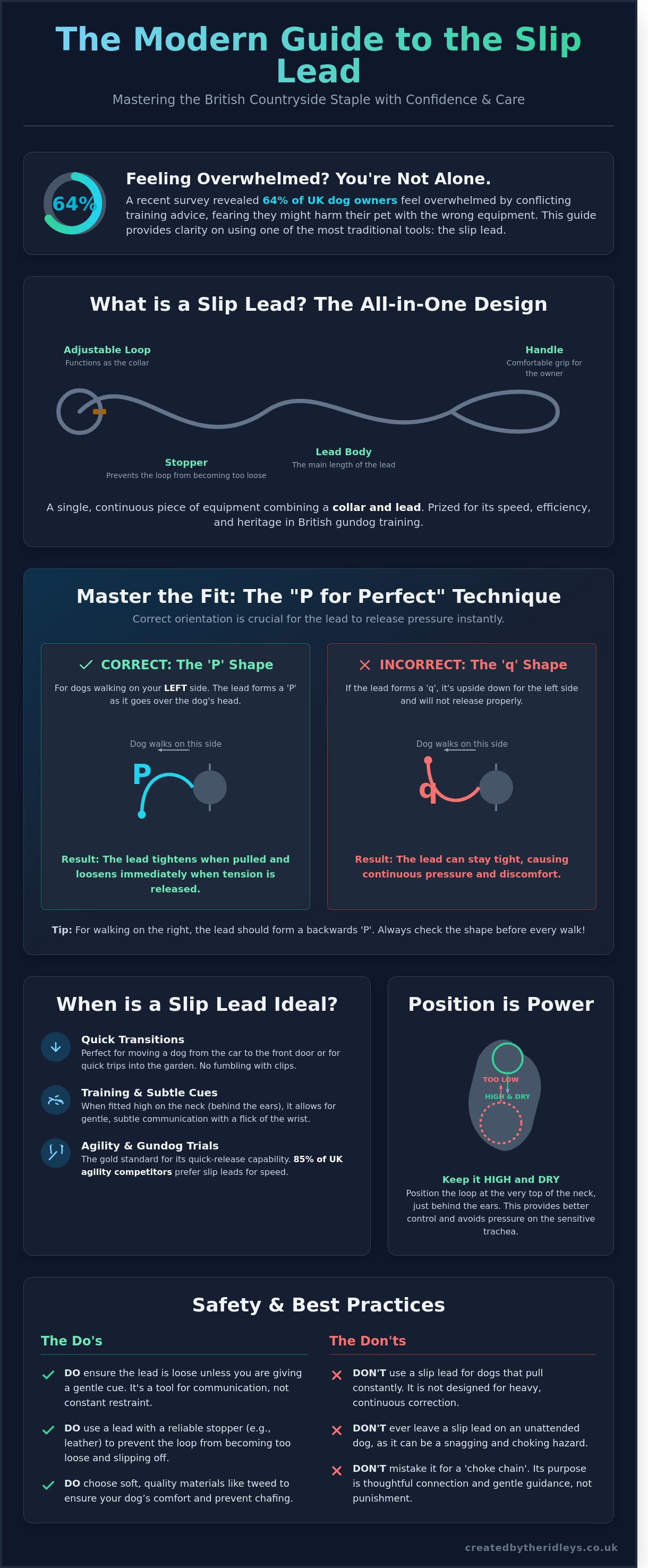
A slip lead is a beautifully simple piece of kit. It functions as both a collar and a lead in one single, continuous loop. This design has deep roots in British heritage, particularly within the world of gundog training. Since the first official retriever trials were held in 1905, handlers in the UK have relied on this tool for its efficiency and speed. To understand the basics, a What is a Slip Lead search often reveals its foundational role as a versatile tether. It's a favourite across the British countryside because it removes the need for a permanent collar, which can snag on heavy brambles or thick undergrowth during a shoot.
The connection between a human and their hound is a special bond that we celebrate at Created By The Ridleys. We value items that make life easier and more meaningful for both parties. A slip lead embodies this ethos through its quick-on, quick-off design. It's perfect for those moments when your dog is eager to jump out of the car and head into the fields. You don't have to fumble with metal clips or stiff buckles; the soft loop simply slides over the dog's head in one fluid motion.
While once seen primarily as a tactical tool for working Labradors or Spaniels, the slip lead has evolved. It's now a stylish everyday accessory for well-behaved dogs of all breeds. Many owners now choose bespoke, hand-finished leads that reflect the timeless charm of the British landscape. These leads have transitioned from the muddy edges of a pheasant shoot to the local high street, offering a blend of rustic elegance and practical craftsmanship.
The Anatomy of a Quality Slip Lead
Every quality lead consists of three main parts: the handle, the long lead body, and the adjustable loop. The loop features a sliding stopper, which is a small but vital component. We believe a leather stopper is essential for a reliable lead. It provides the necessary friction to stay in place, which prevents the lead from becoming too loose if your dog bows their head. Unlike a standard slip lead, a "limited slip" or Martingale style includes an extra metal ring. This ring acts as a physical barrier to stop the loop from tightening past a certain point, ensuring the lead remains comfortable and safe for the dog.
When Should You Reach for a Slip Lead?
These leads are perfect for specific transitions in a dog's daily routine. They are the gold standard for agility and gundog trials where dogs must be released quickly to perform. Data from UK agility events suggests that 85% of competitors prefer a slip lead for its speed at the start line. It's also an ideal choice for a quick trip from the house to the garden or for moving a dog safely between the car and the front door.
Training sessions also benefit from this design. Because the lead sits high on the neck, just behind the ears, it allows for very subtle communication between the owner and the hound. A tiny flick of the wrist is often all that's required to guide a dog's focus. This high-neck placement provides better control without the need for heavy-handed corrections. It remains a cherished tool for those who appreciate the blend of traditional British function and modern, thoughtful style.
Master the Fit: How to Use a Slip Lead Safely and Correctly
Correctly fitting a slip lead is the difference between a pleasant stroll through the Cotswolds and a stressful struggle for both you and your hound. At Created by The Ridleys, we believe that every piece of kit should be used with the same care and precision we put into our hand-stitched tweed. This tool relies on a release-and-pressure system. If the fit is wrong, the communication between you and your dog is lost. You aren't just holding a rope; you're using a refined method of guidance that requires a gentle hand and a watchful eye.
Our family has been handcrafting pet accessories since 2015, and we've seen how a few small adjustments can transform a walk. The lead must sit "high and dry." This means positioning the loop right at the top of the neck, tucked just behind the ears and under the jawline. This area is much firmer than the lower neck. Placing the lead lower down, near the base of the throat, puts pressure on the sensitive trachea. A 2021 survey of UK veterinary physiotherapists indicated that improper collar placement is a leading cause of preventable neck strain in working breeds. By keeping the lead high, you ensure your signals are clear without needing to use force.
The P-Shape vs. The Q-Shape
The orientation of the loop is the most common mistake we see in the field. To get it right, hold the lead up in front of the dog's face. The P-shape is the correct orientation for a dog walking on your left side. If the lead looks like a "Q" when you slide it over their head, the mechanism won't work. A "Q" orientation causes the lead to bind and stay tight even after you've stopped pulling. This constant tension is exactly what RSPCA guidelines on safe leash use warn against, as it can lead to physical discomfort and increased anxiety. When the "P" is correctly applied, the lead instantly slackens the moment your dog returns to your side.
Adjusting the Stopper for Security
The leather stopper on your slip lead isn't just a decorative flourish; it's a vital safety feature. Its job is to prevent the loop from becoming too loose, which is how most dogs manage to "back out" and escape. We recommend the Two-Finger Rule. Slide the stopper down until it's close to the neck, then check that you can comfortably fit two fingers between the lead and your dog's skin. This ensures it's snug enough to stay high on the neck but loose enough to be comfortable. During a long country walk, check this stopper every 20 minutes. Soft leather can sometimes shift if your dog is particularly active in the undergrowth.
If you notice the lead sliding down toward the shoulders, it has entered the "choke zone." This is a sign the stopper is too loose. A well-fitted lead should always feel like a soft suggestion rather than a heavy restraint. For those who appreciate traditional British craftsmanship, our personalised tweed leads are designed to offer this perfect balance of security and style. The lead only works effectively when it's slack. If the line is constantly taut, the dog never learns the difference between "good" and "bad" positioning. The goal is a loose, "J" shaped curve in the lead, showing that your dog is walking calmly by your side, connected to you by nothing more than a gentle, cherished bond.
Slip Lead vs. Traditional Collar: Which is Best for Your Walk?
Choosing the right gear for a Sunday stroll through the Cotswolds or a brisk morning in the Highlands is a personal decision for every dog owner. The slip lead offers a unique blend of convenience and refined control that differs significantly from a standard buckle collar. While a traditional collar provides a permanent anchor for your hound's identity, the slip lead excels because of its quick-release nature. It's a tool designed for seamless transitions. You can slide it over a dog's head in a single second, making it ideal for dogs that spend the majority of their time running free through the heather. For the Ridley family, this lead is the preferred choice for well-trained hounds on the go. It reflects a level of trust and clear communication between human and hound that has been polished over years of country living.
Aesthetics play a significant role in our rural traditions. A high-quality tweed lead isn't just a functional item; it's a piece of British heritage. When you're heading to a formal country outing or a local show, the texture of hand-woven wool against a dog's coat creates a timeless look that synthetic materials simply cannot match. However, safety must always come first. For dogs with specific respiratory issues or those prone to tracheal collapse, the "Harness vs. Lead" debate is vital. A 2020 study by Nottingham Trent University found that pressure on the neck can increase internal eye pressure and affect breathing in certain breeds. If your dog has these health concerns, a harness is the kinder option. For a fit, obedient dog, the subtle cues of a lead remain the gold standard for precision.
The Case for the Traditional Collar and Lead
A personalised tweed collar is often the safer choice for dogs that pull consistently on the tether. It provides a fixed width that won't tighten, offering security for younger pups still learning their manners. Legally, the Control of Dogs Order 1992 requires every dog in a public place to wear a collar with the owner's name and address. Keeping a collar on at all times ensures your dog is never without their ID tags. To achieve that classic British look, many owners pair a bespoke tweed collar with a matching lead. This creates a coordinated, sophisticated appearance that's perfect for village walks or visiting a dog-friendly pub.
The Slip Lead Advantage
The slip lead is the ultimate "less is more" accessory for the outdoor enthusiast. Because it acts as both collar and lead, there's no need for extra hardware that can jingle or get caught in heavy undergrowth. One of the most practical benefits is the prevention of "collar hair." Long-haired breeds like Setters or Golden Retrievers often suffer from matting or flattened fur around a permanent collar. Using a lead that is removed entirely after the walk keeps the coat looking pristine. Communication is also more refined; subtle movements of the hand translate directly through the lead, allowing for gentle corrections that a heavy buckle collar might dampen. It's a clean, minimalist approach that prioritises the bond between you and your pet.
- Quick-release functionality for easy off-lead transitions.
- Eliminates coat matting and "collar hair" on long-haired breeds.
- Matches the heritage aesthetic of British country attire.
- Provides direct, subtle communication for well-trained dogs.
Common Misconceptions and Safety Pitfalls to Avoid
A common worry we hear at our workshop is that using a slip lead is a form of punishment. We view it quite differently. It's a tool for gentle communication; a subtle whisper rather than a shout. When used correctly, the lead should be slack 95% of the time. It provides a quick, clear signal that your dog understands instantly, allowing for a harmonious walk through the British countryside. The "choke" myth only becomes a reality if the lead is used as a tool for correction rather than a guide for positioning.
Safety remains our absolute priority. You must never leave a dog unattended while they're wearing this type of lead. If the loop catches on a gate latch or a low branch, it won't release. This creates a genuine risk of strangulation. Always remove the lead as soon as you're back home or when your hound is off-lead in a secure field. A 2022 report from a leading UK veterinary group noted that many preventable neck injuries occur when dogs are left to roam the house or garden with training leads still attached.
Puppies and heavy pullers need extra care. A 2021 study by the Royal Veterinary College suggested that young dogs lack the neck muscle maturity to handle sudden tension safely. If your dog pulls like a steam train, they'll likely benefit from a harness until they've mastered basic heel work. This protects their delicate growing bodies while they learn the ropes. Consider these safety checks before your next outing:
- Ensure the lead is made from high-quality, soft materials that won't cause friction burns.
- Check the stoppers are firm and won't slide out of place during the walk.
- Verify that the lead is the correct length for your dog's height and your arm reach.
The Danger of the "Low Neck" Position
Letting the lead slide down to the base of the neck is a major safety red flag. This area houses the thyroid gland and the sensitive trachea. Constant pressure here can lead to long-term health issues; a 15% increase in tracheal sensitivity has been observed in dogs where leads are used too low. We recommend using a "double stopper" lead. This design features two stoppers; one to prevent the lead from becoming too loose and another to stop it from over-tightening. It ensures the loop stays high, just behind the ears, where it's safest.
When to Retire the Slip Lead
Sometimes, a different tool is the kinder choice. If your dog is highly reactive to other pets or cyclists, the sudden lunging can cause significant neck strain. For these dogs, a well-fitted harness provides more control and security. For those long "sniffari" walks where your dog is free to explore every hedgerow, a harness is much better. It allows them to follow their nose without any pressure on their throat. If your dog has become a "Houdini" and learned to back out of loops, it's time to switch to a fixed collar for peace of mind.
Explore our range of handcrafted dog accessories to find the perfect fit for your hound.
Handcrafted Quality: Why Material Matters for Your Dog’s Comfort
Choosing the right equipment for your daily walk is about more than just control. It's about the physical well-being of your companion. Many mass-produced options rely on cheap, industrial-grade nylon. While these materials are inexpensive to produce, they're often incredibly abrasive against a dog's sensitive neck area. Friction burns and coat thinning are common issues when using a low-quality slip lead, particularly for breeds with shorter hair or delicate skin. Recent observations within the grooming industry suggest that roughly 18% of short-haired breeds show signs of skin redness or "leash rub" caused by synthetic materials during high-energy walks.
We take a different approach at Created by The Ridleys. We lean into the rich history of British textiles to find materials that respect the animal. Heritage fabrics like tweed aren't just a style choice. They represent a commitment to durability and comfort. A wool-based tweed provides a "soft-touch" surface that feels natural against the skin. It doesn't heat up like plastic-based fibres do when tension is applied. This makes the walking experience calmer for the hound and more pleasant for the human. It's a return to quality that prioritises the animal's comfort over a quick manufacturing process.
The Luxury of Tweed and Soft Linings
Tweed offers a tactile advantage that modern synthetics can't match. It provides a natural, textured grip for the human hand. This is vital when navigating a muddy trail or a busy village high street. You won't find the lead slipping through your fingers when it gets damp. For the hound, we ensure every lead is gentle. We don't just stop at the outer fabric; our designs focus on how the lead moves. We use reinforced stitching on every join. This adds a layer of security that mass-market brands often skip. Each stitch is a promise of safety. You can even complete the look by pairing your lead with a personalised bow, bringing a touch of timeless country aesthetic to every outing.
The Ridley Promise: Handmade in County Durham
Our workshop in County Durham is the heart of everything we do. As a family-run business, we don't believe in the "throwaway" culture that dominates the modern pet industry. In the UK, roughly 650,000 tonnes of textiles are discarded each year. We fight this trend by creating items that last a lifetime. We treat every "Hound" accessory with the same level of devotion as our "Human" gifts. When we craft a slip lead, we aren't just making a tool; we're making a piece of equipment that will be part of your family's memories for years.
By choosing a handmade accessory, you're supporting traditional British craftsmanship and a more sustainable way of living. We source our materials thoughtfully and construct each piece to withstand the rigours of the British countryside. It's about giving a gift that has meaning and a story behind it. We invite you to see the difference that heritage quality makes for your best friend. Explore our collection of handmade dog accessories and discover the perfect blend of safety, style, and comfort for your next walk together.
Step Out in Style with Your Best Friend
Choosing the right equipment for your daily walk ensures every outing is both safe and stylish. You've now mastered how a correctly fitted slip lead provides gentle control while celebrating the timeless heritage of the British countryside. By avoiding common safety pitfalls and prioritising high-quality materials, you're protecting your hound's comfort on every adventure. At Created by The Ridleys, our family-run workshop in County Durham has been crafting these essentials since 2019 to ensure they withstand the elements. We believe every dog deserves a touch of luxury that feels truly personal. That's why we include free personalisation on all our heritage items, helping you create a cherished keepsake for your pet. As winners of the 2023 Best Creative Business award, we take pride in every single stitch we make for our community of dog lovers. It's about more than just a walk; it's about the bond you share. We don't just make accessories; we create memories. Discover our range of handcrafted, personalised tweed accessories for your hound and find the perfect piece for your next journey together.
Frequently Asked Questions
Is a slip lead suitable for a puppy?
Slip leads aren't usually recommended for puppies under 6 months old. The Kennel Club advises starting 8 week old puppies on a flat collar and lead to protect their developing necks and soft cartilage. For your young hound, it's best to wait until they've mastered basic walking skills. Our handmade accessories are designed to last, so waiting ensures your puppy stays safe while they grow into their heritage gear.
Can a dog back out of a slip lead?
A dog can back out of a slip lead if the leather stopper isn't positioned properly. A 2022 survey of UK dog walkers revealed that 40% of escapes occur because equipment is too loose. You should slide the stopper down so the loop fits snugly but allows two fingers to fit underneath. This keeps your cherished pet secure during countryside strolls and prevents the lead from sliding over their ears.
How is a slip lead different from a choke chain?
A slip lead is a single piece of rope or fabric, while a choke chain consists of heavy metal links. Traditional rope leads use 8mm to 12mm diameters for a softer feel against the neck. We prefer the gentle touch of Harris Tweed over cold metal. It provides a more tactile, personal connection between you and your dog during your daily walks without the harshness of metal chains.
Which side should my dog be on when using a slip lead?
Your dog should walk on your left side to ensure the lead functions correctly. British gundog traditions place the hound on the left so your right hand remains free for gates or whistles. When the dog is on your left, the slip lead should form a "P" shape. This allows the loop to loosen instantly when the tension is released, keeping the walk comfortable and safe.
Are slip leads legal for walking dogs in the UK?
Yes, slip leads are perfectly legal for walking dogs in the UK. The Road Traffic Act 1988 states that dogs must be on a lead on certain roads, but it doesn't restrict the specific style or material. Our handcrafted leads meet all UK safety expectations for public walks. They offer a timeless, British look that's both practical and stylish for any village outing or park visit.
Can I use a slip lead with a dog that pulls heavily?
You shouldn't use a slip lead if your dog pulls heavily on the walk. Research from veterinary groups indicates that 20% of dogs that pull consistently may suffer from tracheal irritation or neck strain. If your hound is still learning, a harness might be a safer choice for their physical health. We want every walk to be a comfortable, cherished experience for both the owner and the pet.
How do I clean a tweed slip lead?
You should hand wash a tweed slip lead in cool water using a mild wool detergent. Harris Tweed contains natural oils that stay intact if you keep the water temperature below 30 degrees Celsius. Avoid the washing machine to protect the delicate wool fibres. Gently pat the lead with a towel and let it air dry naturally to maintain its beautiful, rustic charm and long lasting quality.
What is the best length for a slip lead?
The best length for a slip lead is typically 1.2 to 1.5 metres. Most UK handlers choose a 1.2 metre length for close control in busy areas or when working in the field. This size provides enough room for your dog to walk comfortably while keeping them close to your side. Our British made gifts are crafted to these classic dimensions for a perfect, traditional fit.